
As an Amazon Associate, we earn from qualifying purchases with no additional costs for you.
The changes in climate in North America are why so many birds migrate. Fall migration picks up in September, with many species moving southwards to escape the increasingly cold adverse conditions of the north.
The raptors, particularly, hawks are most often seen migrating during September. You can see thousands of individuals and different species at this time, such as the Broad-winged Hawk and American Kestrel. You can see Common Nighthawks and some warblers migrating south during September.
Read more below to learn about the birds that migrate in September each year, including some information on where the birds spend winter and what their biology is.
TIP: If you want to check out the best pair of binoculars for bird watching, we recommend a pair of waterproof and fog-proof 8 x 42 binoculars like the Celestron – Outland X 8×42 Binoculars (Amazon link).
What birds migrate in September?
September is known for the migration of birds of prey, nighthawks, warblers, cedar waxwings, and teal. This variety of birds migrate in response to the changing conditions in fall, which is a signal that winter is on the way. Winter brings low temperatures, frozen water bodies, and few insects and invertebrate prey, making it difficult for many birds to survive, hence many species migrate.
Raptors
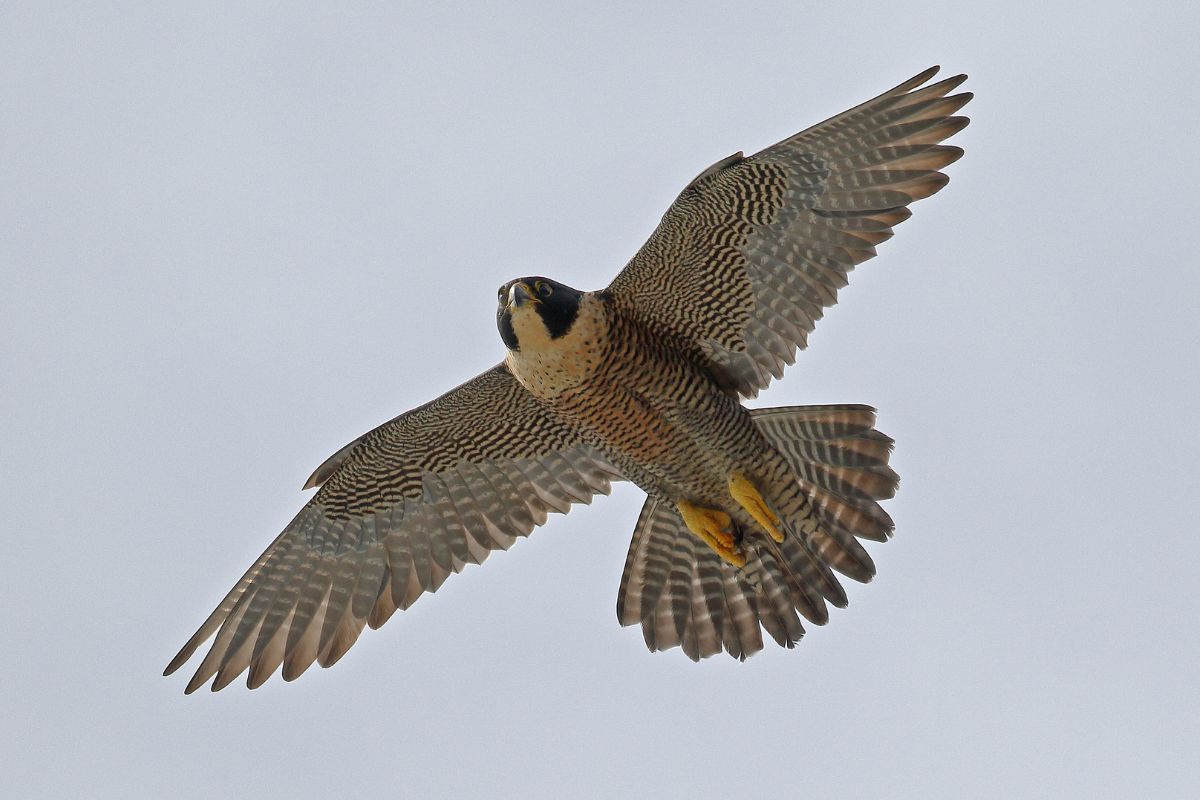
It is in September that you are most likely to see lots of birds of prey. There is even an International Hawk Migration Week (IHMW), which lasts from the middle of September to about the 22nd September. This is when several hawk watch sites become very active, with observers arriving in droves to catch sight of thousands of hawks and kestrels migrating south for the winter.
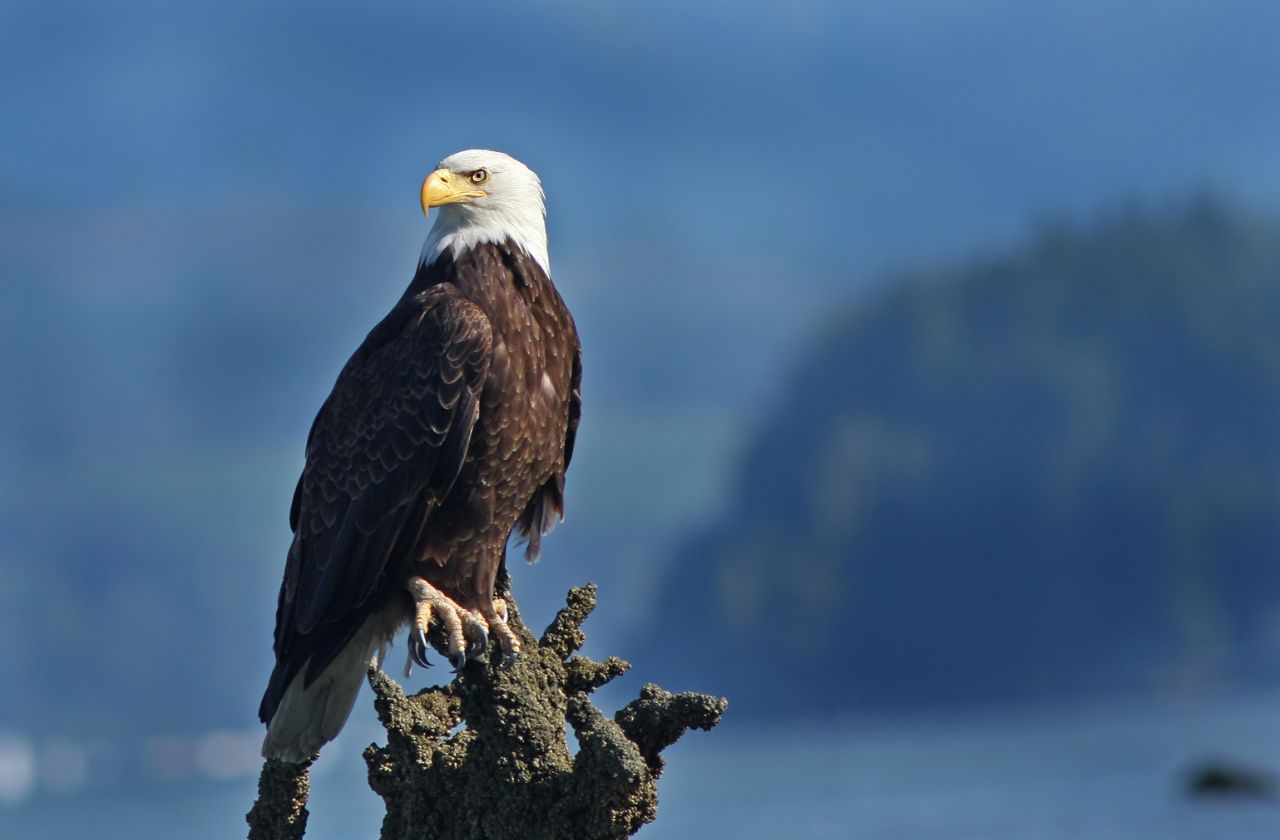
Several thousand birds can be seen during the September hawk watches each year. Among species that can be seen are Bald Eagles, Coopers Hawks, Osprey, Broad-winged Hawks, American Kestrels, Sharp-shinned Hawks, and more.
TIP: Knowing how to spot the birds in your yard is key to enjoying visits from your winged friends as much as possible! The best sources are trusted books, I recommend using the following (Amazon links):
– National Geographic Field Guide to the Birds of North America
– National Audubon Society Birds of North America
Broad-winged Hawk

Huge flocks, known as “kettles”of Broad-winged Hawks can be seen migrating in September. These “kettles” often form where there are thermals that the birds can use to enable easier flight. This is also why the top migration spots for raptors tend to be near mountains where thermals are present.
A thermal is an area of warm air that rises above the ground, making flight much easier. This is a benefit for raptors, since they don’t need to flap their wings as much to remain aloft. The Broad-winged Hawk is very common in the midwestern states of North America; sometimes as many as 100,000 individuals can be counted at one spot on migration.
Broad-winged Hawks are summer residents in the eastern part of the U.S. extending from east Texas to Nova Scotia, Canada. They inhabit deciduous woodlands and mixed woods. They feed on a variety of prey animals from nestling birds to squirrels. The birds migrate south in September and overwinter in countries of South America and Central America.
Coopers and Sharp-shinned Hawks

These two birds are difficult to tell apart, but the Sharp-shinned is a bit smaller with a tail that is square in shape and not round, like a Cooper’s Hawk. Interestingly, both species take advantage of feeders and can be seen preying on birds coming to feeders. Sharp-shinned and Cooper’s Hawks are medium-distance to long-distance migrants that overwinter in the southern states or in Mexico.
American Kestrel

The kestrel is related to falcons and it occurs in semi-open or open areas of countryside. This species undergoes partial migration, with only the northern populations migrating in September to escape the harsh winter conditions. Populations in the southern states like Texas and Alabama, do not migrate.
Birds that are found in North Dakota, near the Great Lakes, and those in Canada, do migrate either to the southern states or as far as South America. American Kestrels are commonly counted during the Hawk Watch Festival in September.
Common Nighthawk

Common Nighthawks are a familiar site on warm nights in the Summer, where they fly around and hawk insects on the wing. They are seen at dusk and dawn, and can be spotted flying around the street lights and catching the insects. You can also observe these birds flying around the lights of baseball stadiums at night. The lights attract large numbers of insects, which the nighthawks then feast on.
These birds have a complete migration where the U.S. population travels down into Central and South America. They overwinter in the countries of South America. These birds migrate both over the land and over the Gulf of Mexico to reach their destination.
TIP: Are you looking for high-quality food for wild birds on your backyard? I recommend using Wagner’s products with the highest quality grains used in blending and made in the USA (Amazon links):
– Deluxe Treat Blend Wild Bird Food
– Eastern Regional Wild Bird Food
– Western Regional Wild Bird Food
– Midwest Regional Wild Bird Food
– Southern Regional Wild Bird Food
Blue-winged Teal

This is the most abundant waterfowl in North America. They occur on shallow water bodies, and breed mainly in the central states, but their range extends into Canada. The birds do migrate long-distances to overwinter in Central America, Mexico, and in some southern states like Florida and Texas. The Blue-Winged Teal are one of the earliest waterfowl species to leave and migrate in fall.
They are omnivorous, feeding on various foods like invertebrates, plant material, grains, and insects. They prefer waters that are quite well-vegetated and will often rest during migration in marshy areas. The teal are all dabbling ducks, meaning that they feed by dipping their head in and moving their feet. They do not completely submerge underwater in the manner that the diving ducks do.
Warblers

The warblers are birds that will begin their fall migration in September as well. If you do see spot any of these birds at this time of year you may find them a challenge to identify. This is because the males molt out of their bright breeding colors and take on drab coloration, so by the time they are migrating south, they do not have their breeding plumage. This means that the diagnostic features are now different and it becomes hard to distinguish one fall warbler from another.
Since the birds don’t plan to breed in winter there is no reason to keep their bright colors, which also make them more visible to potential predators. The bright colors the males have are to attract females during courtship in the breeding season, which is during the summer months. This is why, spring migration is usually preferred by bird watchers if they plan on identifying warblers.
TOP TIP: Curious to discover the most beautiful birds in the USA? This article has the answer! Read this article to find out which birds are the most active during winter.
Cedar Waxwings
Cedar Waxwings breed in Canada. Flocks of waxwings move down into the United States in September. They overwinter in the United States as far south as Florida and Texas. Some birds even venture further into Mexico and Central America.
The waxwings occur in mixed woodlands but also can be found in open fields and gardens. They are fruit-eating birds, which can be seen feasting on cedar berries and berries of other shrubs and trees. They do also take insects when they can, and have been seen catching dragonflies and mayflies. The nests are built in the forks of a tree at a height anywhere from a few meters to several meters above the ground.
My Favourite Equipment for Bird Watching
Bird watching is one of the least expensive hobbies out there, but you still need some equipment to get the most out of it.
The essential equipment to start bird watching is a pair of binoculars. My preference is 8 X 42 binoculars. The number 8 is how much the magnification is, while 42 is the field of view in millimeters of the lenses.
A pair of waterproof and fog-proof 8 x 42 binoculars like the Celestron – Outland X 8×42 Binoculars on Amazon is an excellent choice for both beginners and experts.
In time, you can choose more expensive models and also opt to buy a spotting scope like the Celestron Ultima 80 on Amazon.
These are a lot more expensive compared with binoculars though, so if you are only a beginner, start with binoculars first. A spotting scope is only helpful for birds far away, such as out on a pond or seashore.
There are a few rules or guidelines you should abide by as an ethical birder. These are listed below.
- Do not enter private lands without prior permission from landowners.
- Follow all the rules in refuges and reserves, including cleaning up any garbage from your campsite.
- Do not disturb birds on nests.
- Do not use apps and play songs to call up birds when they are hungry, tired, and breeding during spring and summer.
Conclusion
September is when you first start to see large numbers of birds migrating south to spend the winter in warmer locations where food is more readily available. It is during about the middle of September when you will see the most raptors migrating through from north to south. There are specific hawk watch hotspots where you can see the most hawks, falcons, and eagles on migration. Other early Fall migrants include the Common Nighthawks and the Blue-winged Teal.
TIP: Check out my recommended products if you are looking for the best and trusted equipment for birdwatching in the wild or on your backyard (Amazon link):